
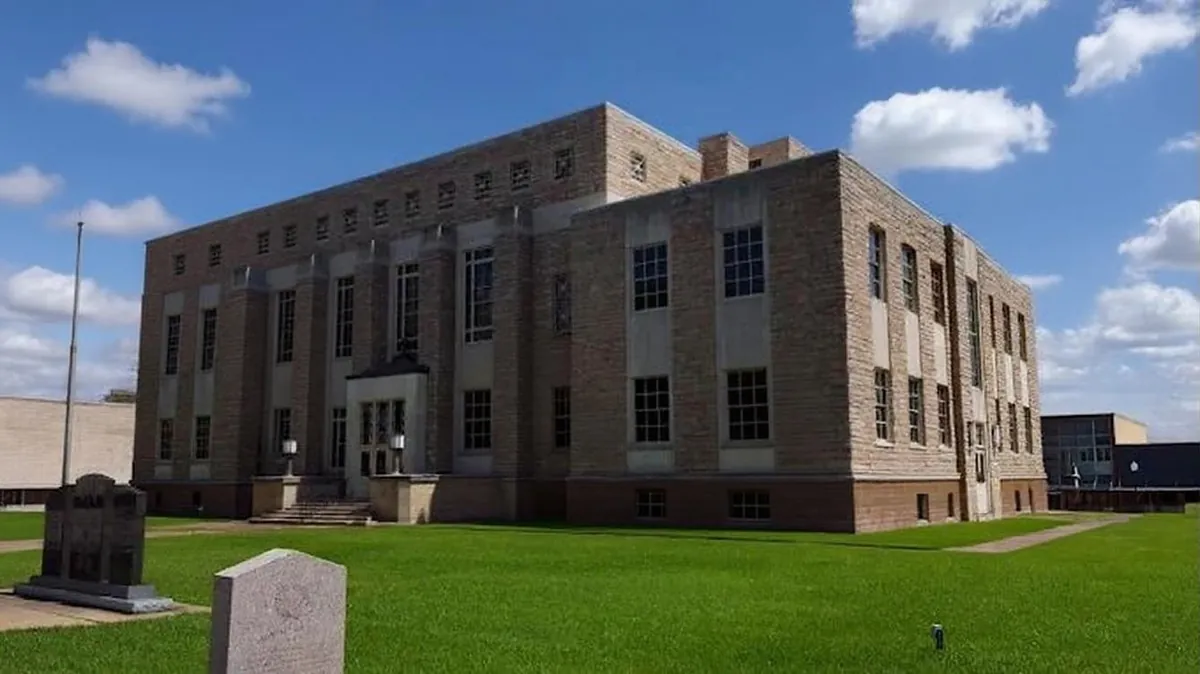
Court records in Cherokee County, Texas are maintained by the District Clerk and the County Clerk and can be accessed through online tools, official court portals, and the clerk's offices. CherokeeTXCourt.us can help find publicly available court record information for Cherokee County. Additional access points include the Cherokee County District Clerk's office, the Cherokee County Clerk's office, and state-level e-filing and court record portals.
Cherokee Court System Overview
Cherokee County is served by the 2nd Judicial District Court, one of the oldest judicial districts in Texas. The county also has a County Court at Law that handles a significant portion of the caseload. Appeals from Cherokee County courts go to the Twelfth Court of Appeals, based in Tyler, which serves seventeen counties including Cherokee. The Cherokee County Courthouse is located in Rusk, the county seat, and houses both the District Clerk and County Clerk offices. The courthouse address and primary contact details are listed below.
Courts Serving Cherokee
Several courts at the state and federal level serve Cherokee County residents:
2nd Judicial District Court
Cherokee County Court at Law
Visit the County Court at Law page for additional details.
United States District Court – Eastern District of Texas
Cherokee County falls within the Eastern District of Texas. Federal civil and criminal matters, as well as federal bankruptcy cases, are handled through this court's divisions.
Municipal Courts
Municipalities within Cherokee County, such as Jacksonville and Rusk, operate municipal courts that handle Class C misdemeanors, traffic citations, and city ordinance violations. Contact the individual city for municipal court details.
What Types of Cases Cherokee Courts Hear
Courts in Cherokee County handle a wide range of case types across criminal, civil, and family matters:
- Criminal: Felonies, misdemeanors, infractions, traffic violations
- Civil: General civil litigation, small claims, debt and contract disputes
- Family Law: Divorce, child custody, child support, protective orders, paternity, adoption, termination of parental rights
- Probate: Decedent estates, guardianships, conservatorships, trust matters
- Juvenile: Juvenile delinquency proceedings, child protective cases
The District Court and the County Court at Law divide jurisdiction based on case type and dollar amount, as described in the sections below.
District Court Cases in Cherokee
The 2nd Judicial District Court in Cherokee County has jurisdiction over:
- Felony criminal cases
- Civil cases where the amount in controversy exceeds the County Court at Law's jurisdictional limit
- Divorce and family law cases (shared jurisdiction with the County Court at Law)
- Juvenile matters
- Appeals from lower courts in certain circumstances
Cases are assigned to the district judge. As of November 1, 2018, all filings — civil, criminal, or family law — must be e-filed through the District Clerk's office. Felony cases typically begin with a grand jury indictment, after which the case proceeds through arraignment, pretrial motions, and trial or plea.
Magistrate Court Cases in Cherokee
In Texas, magistrate functions in Cherokee County are performed by justices of the peace and the County Court at Law judge rather than a separate magistrate division. The County Court at Law handles:
- Class A and Class B misdemeanors
- Civil cases where the amount in controversy falls between $200 and $200,000
- Probate matters (original jurisdiction)
- Appeals from justice of the peace and municipal courts
- Family law cases (shared jurisdiction with the District Court)
Justice of the peace courts handle Class C misdemeanors, small claims up to $20,000, eviction proceedings, and preliminary criminal matters such as issuing arrest and search warrants. Traffic violations and DUI arraignments may begin in justice of the peace court or municipal court depending on where the offense occurred.
Family Law, Probate, and Juvenile Matters in Cherokee
Family Law
Divorce, custody, child support, paternity, adoption, and protective order cases are filed through the District Clerk's office. Both the District Court and the County Court at Law share jurisdiction over family law matters. The County Court at Law has issued a standing order on children, property, and conduct of parties that applies to all family law cases assigned to that court.
Probate
Probate cases — including decedent estates, guardianships, and conservatorships — are generally filed in the County Court at Law. The County Clerk maintains probate records.
Juvenile
Juvenile cases in Cherokee County are heard by the District Court. Juvenile records are confidential under Texas law and are not available for public inspection. Contact the District Clerk's office for information about juvenile court services.
How Cases Move Through the Cherokee Court System
- Filing / Initiation: Criminal cases begin with an arrest or complaint; civil cases begin with a petition filed through eFileTexas. Family law and probate cases also require e-filing.
- Assignment to Judge: Cases are assigned to either the District Court or the County Court at Law based on jurisdiction and case type.
- Initial Hearing: Criminal defendants are arraigned and informed of charges. Civil parties receive a scheduling order or attend an initial conference.
- Pretrial Phase: Both sides conduct discovery, file motions, and may attempt mediation or plea negotiations.
- Trial or Resolution: Cases proceed to jury or bench trial, or resolve through plea agreement, settlement, or default judgment.
- Post-Judgment: Criminal cases move to sentencing and possible appeal. Civil judgments may be enforced or appealed to the Twelfth Court of Appeals.
Court Administration, Local Rules, and Public Access in Cherokee
The 2nd Judicial District Court judge serves as the presiding judge for court administration in Cherokee County. Day-to-day operations of the clerk's offices are managed by the District Clerk and the County Clerk.
- Local Rules: Local rules and standing orders for the County Court at Law are available on the County Court at Law page. District Court local rules can be requested through the District Clerk's office.
- Public Access: Under the Texas Public Information Act, most court records are open to public inspection. Exceptions include sealed records, juvenile records, and certain family law records involving minors. You can submit a public information request to the appropriate clerk's office for records that are not available online.
- Attending Hearings: Court proceedings in Cherokee County are generally open to the public. Contact the District Clerk or County Clerk to confirm hearing dates and whether remote attendance options are available for a particular case.
Key Contacts
District Clerk – Alison Dotson
Court Records and Related Court Resources in Cherokee
- E-Filing Portal: All civil, criminal, and family law filings to the District Clerk must go through eFileTexas.gov, the official e-filing system for Texas courts.
- Cherokee County Government Website: The Cherokee County website provides links to county offices, downloadable forms, and financial reports.
- Vital Records: Birth, death, and marriage records are available through the County Clerk. Divorce records are maintained by the District Clerk. The Texas DSHS maintains a directory of local vital record offices for Cherokee County.
- TDCJ Inmate Search: To locate an individual in a Texas state prison, use the TDCJ online inmate search.
- Cherokee County Sheriff / Jail Information: The Cherokee County Sheriff's Office provides information about the county jail, inmate trust fund accounts, and can be reached at 903-683-2271.
- Texas Sex Offender Registry: The Texas Department of Public Safety maintains a public sex offender registry searchable online at the DPS website.
- Appellate Court: Appeals from Cherokee County courts are heard by the Twelfth Court of Appeals in Tyler.
- Federal Court Records: Federal case records for the Eastern District of Texas are accessible through the PACER system.